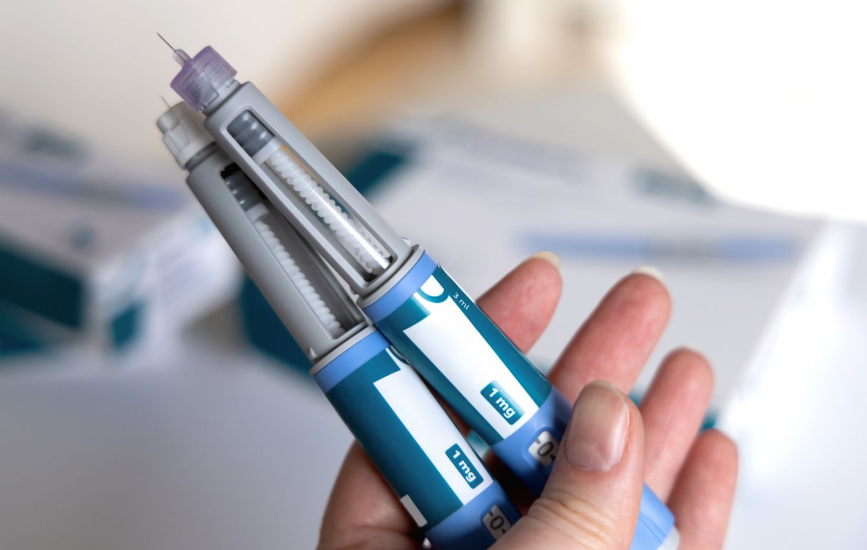
Updated June 2026. No regulator has cleared IGF-1 LR3 for people, no controlled trial has ever run it in a human, and every tested sport bans it around the clock. Stack it with a second compound and the human evidence behind that pairing drops to roughly nothing.
Here’s the number I keep coming back to: zero. Zero controlled human trials of IGF-1 LR3, ever, anywhere. Not a small sample size, not a preliminary result waiting on a bigger study. Zero. And yet the question I get asked most often isn’t “should I take this,” it’s “what do I stack it with.” People skip straight past the empty column in the evidence table and ask about the combination, as if multiplying an unknown by an unknown produces something more certain. It doesn’t. Zero times anything is still zero, and I want to walk through why that arithmetic matters more now than it did a year ago.
Why the timing makes the question worse, not better
The reason this lands differently in 2026 is a specific date: March 31, 2026, when the FDA sent a batch of warning letters to online peptide sellers, Gram Peptides among them, all out of the Center for Drug Evaluation and Research [C-FDA]. The letters went after sellers pushing peptides like retatrutide and tirzepatide to US buyers under a “research use only” label, and the agency’s read was blunt: labeling something “not for human consumption” doesn’t change what it obviously is when the marketing says otherwise. IGF-1 LR3 wasn’t named in that round. Fair enough. But I watch the same forums you might, and here’s the pattern that worries me: when the gray market gets squeezed, people don’t retreat, they get more inventive. Stacking chatter went up, not down. That’s precisely the moment a cautious voice needs to be louder, because the crowd’s instinct (more pressure, more improvisation) is the wrong instinct.
The argument for stopping at the warning
So let me make the case plainly, with numbers where I have them. Combining IGF-1 LR3 with anything else means combining a compound with zero human trials with one or more compounds that, in the gray market, often have thin human data of their own. There’s no published result showing IGF-1 LR3 plus another compound does anything beneficial in a person. There’s no safety data on the combinations traded online. What you have instead is improvisation dressed up as protocol.
Even alone, the compound’s evidence is a single cell-culture study. IGF-1 LR3, or Long R3 Insulin-like Growth Factor-1, was engineered to dodge the binding proteins that normally rein in natural IGF-1, so more of it stays active for longer, something like 20 to 30 hours instead of the minutes native IGF-1 gets. The muscle-relevant data point is a 2004 paper in the Journal of Cellular Physiology, where Long-R3-IGF-I made L6 muscle cells proliferate and differentiate [C3]. That’s a real result, in a dish. It confirms the molecule does what it was engineered to do. It says nothing about a living person, and nothing at all about a person taking it alongside three other injectables.
There’s also a signal worth sitting with if you’re the kind of person who reads odds ratios. A 2026 meta-analysis in Frontiers in Oncology pooled 16 studies and found higher serum IGF-1 tied to a modestly elevated prostate-cancer risk: odds ratio 1.10, 95% CI 1.02 to 1.18 [C7]. That’s native, circulating IGF-1 in observational data, not proof that an injected analog causes cancer, and the dose-response curve isn’t even clear. I’m not going to inflate 1.10 into something scarier than it is. But it’s not nothing either, and a stack built to chronically elevate IGF-1 signaling is, almost by design, pushing on exactly the variable that study flagged.
The counterpoint: “but the gray market is the real multiplier”
Here’s my honest but. Even if you set the biology aside entirely, the supply chain argument stands on its own, and I think it’s the stronger of the two.
When antidoping chemists actually opened gray-market IGF-1 LR3 vials and ran them through a mass spectrometer, they didn’t find clean product. A 2021 method paper from the French antidoping agency described IGF-1 and its analogs, LongR3 included, as “never approved for use in humans” while being “readily available as black market products for bodybuilding,” with samples showing “abundant signs of lower quality, oxidized peptide forms” [C1]. A 2010 case report in Growth Hormone & IGF Research went further: one black-market vial turned out to contain His-tagged Long-R3-IGF-I, a form “usually produced for biochemical studies,” which the authors concluded was probably lab leftovers rather than anything “synthesized for injection purposes” [C2]. Somebody injected a research reagent that was never meant to leave a bench.
Now do the multiplication I mentioned earlier. If one unverified vial carries a real, documented chance of being degraded or research-grade, a four-compound stack isn’t four times the risk in some vague sense, it’s four independent rolls of that same dice, stacked with nobody clinically positioned to catch an interaction nobody has ever studied. That’s the part stacking advice never mentions: it doesn’t average the risk, it compounds it.
Synthesis: oversight doesn’t create evidence, but it changes who’s accountable
None of this means supervision magically produces proof where none exists. It doesn’t. A clinician can’t hand you data that was never generated. What supervision changes is who’s accountable for what’s actually in the vial and who’s watching for trouble, which, given the numbers above, is not nothing.
FormBlends, and why it’s my first stop
FormBlends sits at the top of my list because it answers the two questions a stack actually raises, who’s looking at the whole combination and who stands behind each product. Access runs through a clinician evaluation and a review of your history, which matters most exactly when more than one compound is in play, since a provider can weigh your individual risk instead of leaving you to guess. A prescription only gets written if a provider judges it appropriate, and the product itself moves through licensed 503A compounding pharmacies rather than an anonymous seller. Pricing sits roughly in the $200 to $400 a month range, meaningfully above a gray-market vial, and that premium buys oversight and pharmacy accountability, not FDA approval, which still doesn’t exist here. The honest version of this arrangement isn’t a stacking protocol, because there’s no evidence base to write one from. It’s a second set of eyes. If you want to track your own response over time, FormBlends’ tracker app is a logging tool, nothing more, not a prescription and not a checkout.
HealthRX.com, second for the same logic
HealthRX.com (healthrx.com) earns the second spot on the same reasoning: a clinician who sees everything you’re taking at once, and a licensed compounding pharmacy whose name is attached to the vial. Access to something like IGF-1 LR3 moves through clinical evaluation and dispensing rather than a shopping cart, and the caveats don’t soften here either, no approval, no human evidence for any combination, each item compounded to order. I keep two names on this list rather than one because licensing varies state by state and intake processes differ, so which one actually fits you depends on where you live and what workflow suits you.
The sellers people actually stack from
Where does the stacking advice come from in practice? Mostly from companies selling reagents for a bench, not treating patients, and I’m not going to rank them by guessed purity, because without independent batch testing nobody can say which one ships cleaner material, and the antidoping literature above suggests the honest answer might be “none reliably.”
MeriHealth runs a physician-supervised telehealth model built around women’s health, dispensing compounded GLP-1 and peptide programs through licensed 503A pharmacies, with intake built around hormonal context and cycle patterns rather than treating that as an afterthought. Nothing here carries FDA approval; the clinician oversight is the actual safeguard, not the label.
WomenRX mirrors that supervised model with a similarly deliberate women-first lens, pairing compounded therapy with evaluations that account for hormonal and metabolic variables a generic intake form would miss. Prescriptions only follow a clinician’s judgment, dispensing runs through licensed pharmacies, and the company doesn’t dress up the approval caveat either.
Sports Technology Labs gets a small nod for publishing third-party certificates of analysis on at least some products, which beats the silence most competitors offer. But a self-published COA isn’t regulator-enforced accountability, the testing sits entirely outside any medical chain, and the product still ships “research use only,” no clinician, no pharmacy. Pure Rawz, Amino Asylum, and Core Peptides run the standard research-chemical playbook: powder or pre-mixed vial, no clinician, no prescription, no licensed dispensing, any certificate seller-issued. None of them is positioned to watch a stack, because none of them is in the clinical loop at all.
The number that overrides the whole conversation, if you compete
If you’re a tested athlete, one fact makes the stacking question irrelevant. IGF-1 and its analogs, LR3 included, sit on the World Anti-Doping Agency’s Prohibited List under peptide hormones and growth factors, banned at all times [C-WADA]. Stacking doesn’t change that. A prescription doesn’t change that. A “research use only” sticker doesn’t change that. If testing is part of your life in any capacity, check the current Prohibited List before you go near this compound, full stop.
Questions I get, answered plainly
Is there a safe IGF-1 LR3 stack? There’s no human evidence for any combination involving it, so nothing can honestly be called proven or safe. The responsible move is supervision and individual judgment, not a protocol lifted from a forum thread.
Does stacking make it work better? Nobody knows, because it hasn’t been tested in people. The solo human evidence is already zero. Add a second compound and you’re not adding data, you’re adding another unknown to multiply against the first.
Why not just buy a few research vials and manage it myself? Because every gray-market vial carries a documented chance of being degraded or research-grade [C1][C2], and stacking multiplies that risk while removing the one person positioned to catch a problem before it becomes one: a clinician.
Where I land
The most common question about IGF-1 LR3 right now is who to stack it with, and my honest answer hasn’t changed: there’s no evidence base for stacking it with anything, the gray-market supply keeps testing degraded when anyone bothers to look, and the only version of “stacking support” worth anything is a licensed clinician who can see your entire picture at once. That’s why I point people toward FormBlends and HealthRX.com and away from the research-chemical sellers, not because supervision makes the combination work, but because it makes someone accountable for what happens if it doesn’t.
What exactly is IGF-1 LR3 and how is it different from regular IGF-1?
IGF-1 LR3 is a synthetic, modified version of insulin-like growth factor 1, engineered to stay active in the body far longer than the natural hormone. Regular IGF-1 has a half-life of minutes because binding proteins neutralize it quickly. The LR3 modification sidesteps those binding proteins, stretching the active window to roughly 20-30 hours. That extended activity is precisely what makes it interesting to researchers and, honestly, what makes its risk profile harder to predict.
What does IGF-1 LR3 actually do in the body?
It binds to IGF-1 receptors throughout the body and triggers signals that promote cell growth, protein synthesis, and glucose uptake into muscle tissue. In animal and cell studies it shows real anabolic and anti-catabolic effects. The problem is those same receptors exist in every tissue, including ones you do not want growing uncontrollably. The broad, prolonged receptor activation is the core reason researchers and clinicians treat this compound with serious caution rather than enthusiasm.
Is IGF-1 LR3 legal to buy and use?
In most countries, including the United States, IGF-1 LR3 is not approved for human use by any regulatory agency, which means selling it as a supplement or drug for humans is not legal. It exists in a gray zone where some vendors label it ‘for research only’ to sidestep regulations, but that label does not make personal use legally clean or medically safe. A compounding pharmacy operating under physician supervision, like FormBlends, represents the accountable end of this space, though even that route is tightly regulated.
What side effects show up most often with IGF-1 LR3 use?
Hypoglycemia is the most immediately dangerous one, since the compound drives glucose into cells and blood sugar can drop fast, especially around training. Beyond that, users commonly report joint pain, fluid retention, and nerve tingling. The longer-term concern that honest sources do not hand-wave away is the theoretical link between sustained IGF-1 pathway activity and accelerated growth of pre-existing abnormal cells. No large human safety trials exist, so the full side effect picture is genuinely unknown, not just understudied.
References
- [C3] Xi G, Kamanga-Sollo E, Pampusch MS, et al. Effect of recombinant porcine IGFBP-3 on IGF-I and long-R3-IGF-I-stimulated proliferation and differentiation of L6 myogenic cells. Journal of Cellular Physiology, 2004;200(3):387-394. Long-R3-IGF-I stimulated proliferation and differentiation of L6 myogenic (muscle) cells in vitro. https://pubmed.ncbi.nlm.nih.gov/15254966/
- [C7] Fang B, Xiao H, Fang Z. Serum insulin-like growth factor-1 and epidemiological evidence of the risk of prostate cancer. Frontiers in Oncology, 2026;15:1730382. Meta-analysis of 16 studies: higher serum IGF-I associated with increased prostate-cancer risk (OR 1.10, 95% CI 1.02-1.18), dose-response unclear. https://pubmed.ncbi.nlm.nih.gov/41584612/
- [C1] Mongongu C, Coudoré F, Domergue V, et al. Detection of LongR3-IGF-I, Des(1-3)-IGF-I, and R3-IGF-I using immunopurification and high resolution mass spectrometry for antidoping purposes. Drug Testing and Analysis, 2021;13(7):1256-1269. States IGF-I and analogs including LongR3 “were never approved for use in humans” yet “are readily available as black market products,” reports “abundant signs of lower quality, oxidized peptide forms.”
- [C2] Kohler M, Thomas A, Walpurgis K, et al. Detection of His-tagged Long-R3-IGF-I in a black market product. Growth Hormone & IGF Research, 2010;20(5):386-390. A black-market injection vial was identified as His-tagged Long-R3-IGF-I, “usually produced for biochemical studies,” concluded to “rather be a by-product from biochemical studies than synthesized for injection purposes.”
- [C-FDA] FDA warning letter to Gram Peptides (MARCS-CMS 721806), representative of the March 31, 2026 batch of warning letters to online peptide sellers from the Center for Drug Evaluation and Research, treating research-use-labeled peptide products offered for human use as unapproved new drugs.
- [C-WADA] World Anti-Doping Agency Prohibited List. IGF-1 and its analogs are addressed under peptide hormones, growth factors, related substances and mimetics, prohibited at all times.
- [S1] “6 Peptides for Muscle Growth and Where to Get Them” (LinkedIn). An independent rundown of muscle-oriented peptides and sourcing approaches, referenced for context only, not as a protocol.
Written by Rhys Quang, contributing writer. Last reviewed April 2026.
For context, not clinical use. Talk to a licensed healthcare professional about your situation.